
Why does a logo published in DNS show up for one recipient and stay invisible for another, when the email tool reports “BIMI active” across the entire list? The answer…
A misconfigured SPF record, a missing DKIM signature, DMARC left in monitoring mode: these are the errors that send campaigns straight to spam before anyone reads a subject line. Since Gmail and Yahoo started enforcing authentication for bulk senders, the technical layer decides what the mailbox does with your message. This section covers that layer end to end.
You will find guides on the three authentication standards, how they interact, and how to read an aggregated DMARC report without misinterpreting the data. The SMTP articles explain what the protocol actually does, why port 25 is blocked while 587 works, when a relay makes sense, and how to decode the reply codes and 550 errors that providers return when they reject a message. A table of 14 verified SMTP providers helps you compare options before switching.
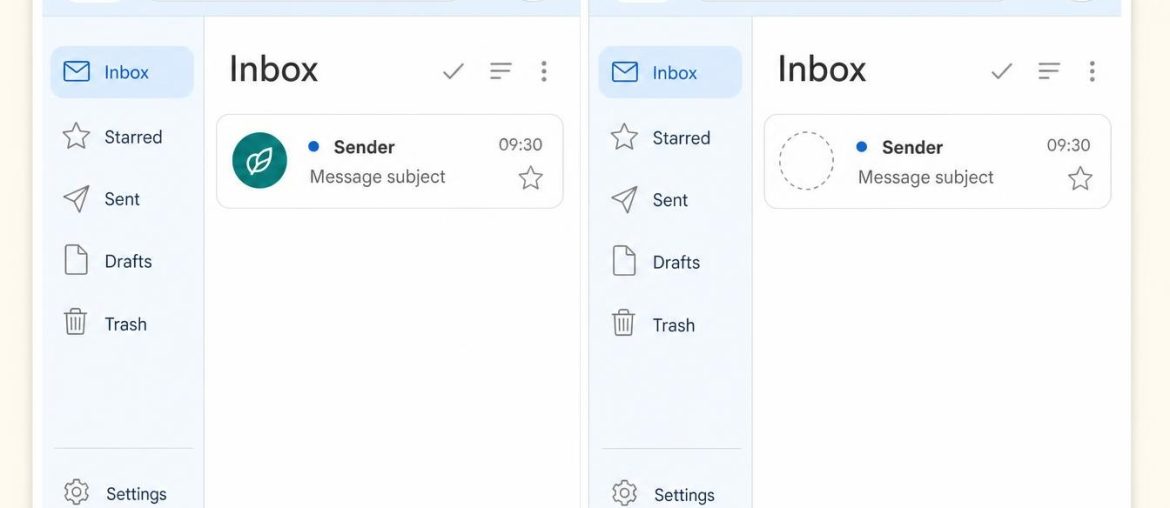
The section also deals with the signals mailbox providers watch beyond the standards themselves: domain monitoring, backscatter bounces you never sent, the BIMI logo and its self-asserted variant, and the new sender requirements announced by Gmail, Yahoo and Orange. Each guide starts from a concrete symptom, a rejection code or a drop in placement, and walks back to the setting that causes it.
If you manage a sending domain, run your own SMTP server or simply want to understand why a provider rejected a campaign, start here. The articles are written for marketers and developers alike, with the DNS records to copy and the checks to run before your next send.
Why does a logo published in DNS show up for one recipient and stay invisible for another, when the email tool reports “BIMI active” across the entire list? The answer…
Publishing an SPF record protects nothing if that same record exceeds a threshold almost no one checks. The most common cause of SPF failure is rarely its outright absence. It…
Does a DMARC record actually block spoofing, or just the campaigns your marketing team still sends from a misaligned router? DMARC (Domain-based Message Authentication, Reporting and Conformance) is a DNS…

In the context of email sending, one of the least visible yet critical aspects is understanding SMTP response codes. These codes, exchanged between servers during message transmission, can provide very…
376 billion emails circulated worldwide every day in 2025, according to the Email Statistics Report 2024-2028 from the Radicati Group. Each one travels through the same text dialogue, largely unchanged…

The SMTP protocol carries your emails from a client or application to the recipient’s server, and every connection goes through a specific port. For submission from an email client or…

Should you set up a separate SMTP relay, or can your mailbox send your transactional emails and campaigns directly? An SMTP relay is an intermediary server that handles the delivery…

The SMTP server for your email depends entirely on your provider: each service imposes its own host and port, with its own encryption mode. No generic value works across the…

Why is your inbox flooded with non-delivery reports for campaigns you never launched? Your email tool’s dashboard shows zero sends. Yet NDRs have been piling up since yesterday. This phenomenon…
Adding a DMARC record to the DNS zone doesn’t finish the job: the record does nothing until someone reads the reports it generates every day. Domain monitoring refers to this…
Why does Gmail reject an email when both SPF and DKIM pass? Your email tool’s dashboard shows “sent.” Some of your Gmail recipients still never receive anything. The explanation lies…

It is not because your proposal is enticing, that your content is good, that your email will necessarily be well received, and this in every sense of the word. Sometimes…

A line in your DMARC report can show spf=fail even when the domain is still protected and the message still landed in the inbox. For each sending source, an aggregate…
Should you change your signup form because Chrome can now confirm a Gmail address in one click? On July 8, 2026, Google opened the origin trial for a new protocol,…

We covered the subject of BIMI (Brand Indicators for Message Identification) in a previous article. Before it can be displayed correctly in the inbox, this logo must meet several requirements.…
Does your _dmarc TXT record still contain a pct=50 tag? It has served no purpose since May 20, 2026. On that date, the IETF published DMARCbis as three RFCs: RFC…
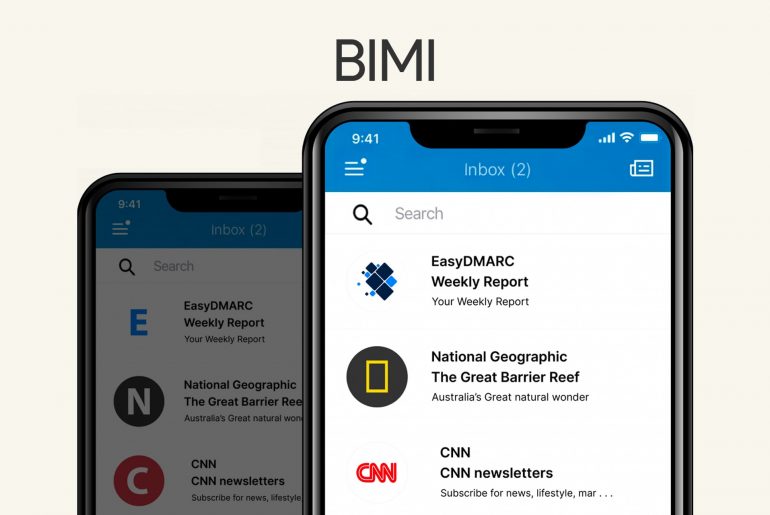
A brand’s logo can appear next to an email in Gmail or Yahoo Mail thanks to BIMI (Brand Indicators for Message Identification), a DNS record that tells mailbox providers where…
Gmail continues to innovate to protect its users. Recently, Google announced its support for the Common Mark Certificate (CMC), a new type of BIMI (Brand Indicators for Message Identification) certificate.…

Your campaigns are landing in spam and your email platform says everything is fine? That’s one of the most frustrating situations for an email marketer: deliverability shows 98%, open rate…
The rules for sending emails are of paramount importance to ensure the successful delivery of messages to users’ inboxes. Orange has recently revised its requirements for senders, aligning itself with…

In March 2026, during an internal routing test, a deliverability team of a European ESP discovers that their emails to Mailman mailing lists consistently fail DKIM checks, despite correctly configured…

Email marketing is notoriously effective. A well-crafted message can significantly influence consumers and their purchasing decisions. However, for that to happen, said message must meet a myriad of criteria and…
Several protocols are used to manage the sending and receiving of emails. These protocols, though often invisible to end users, play a major role in the proper functioning of electronic…

A password reset email is sent out. It never arrives. No error message on the sender’s side, no bounce, no alert in your sending tool. Just silence. In some cases,…

$2.77 billion. That’s what the FBI reported as losses due to Business Email Compromise in 2024 alone, according to the annual IC3 report. A fraction of these attacks succeeded even…
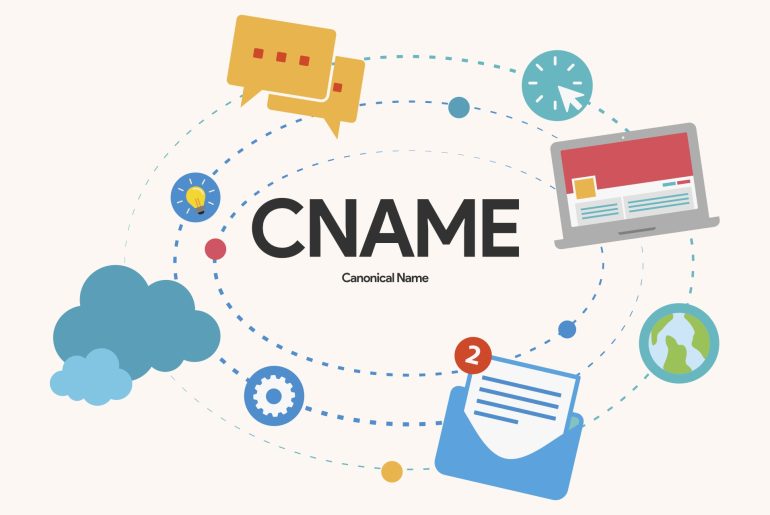
A CNAME (Canonical Name) record is a type of DNS entry that points a domain name to another domain instead of an IP address. For email marketing professionals, mastering CNAME…
Why does an order confirmation the customer is waiting for still end up in spam? Because Gmail and Yahoo judge the sending domain on its authentication and its complaint rate.…

Ah, invalid email addresses… those contacts you think are good, but who, in reality, will never receive your messages. For e-marketing experts, they represent a major obstacle. Hardly visible, they…
Gmail, an essential tool for accessing inboxes, is preparing to significantly tighten its requirements for senders. Starting November 2025, Google will introduce modernized controls and increased transparency during rejections. For…
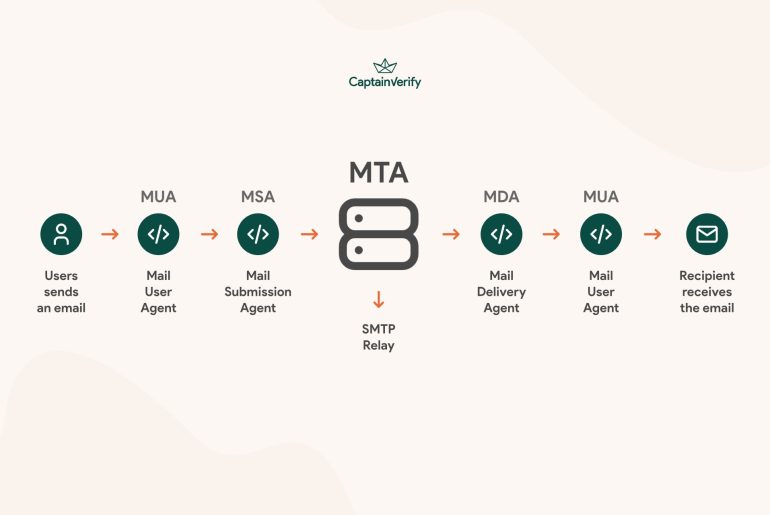
While marketers typically talk about segmentation, open rates, or personalized content, the MTA and verification work behind the scenes to ensure that your email campaigns reach the inbox. Today we…

If you didn’t know already, we inform you that as of February 2024, Gmail, Yahoo, and AOL will no longer accept unauthenticated emails. This is particularly valuable information for email…

For some of you, the term “DNS” surely evokes something vague, or even ultra-technical, better left to the experts. Yet, this famous DNS is like the GPS of your emails.…

The authentication of an email allows the recipient to make sure the message is safe and that it comes from the right person. This is possible thanks to systems set…

Personalizing your email address using your site’s domain name is a key step in improving your email delivery, optimizing their open rate and strengthening your brand image. Here are the…

Who controls the inbox still controls a part of the customer relationship. As digital channels multiply, the email remains one of the most effective tools in marketing. But for a…

When we talk about performance in email marketing, we often mention the open rate, deliverability, or even the sender reputation. But a technical parameter, often underestimated, can have a decisive…
Since email is one of the primary means of communication and is ubiquitous in the professional realm, robust protection is essential. Indeed, the proliferation of junk mail and phishing attacks…
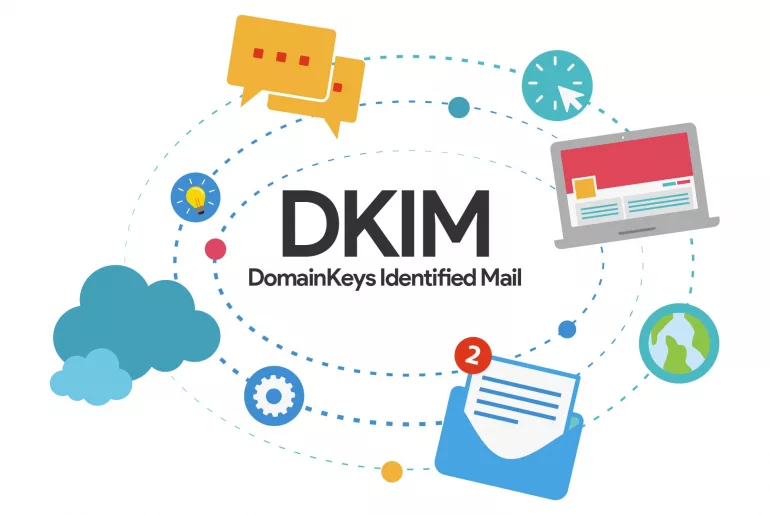
DKIM (DomainKeys Identified Mail) is a digital signature that the sending domain adds to every email. It lets the receiving server check that the message really comes from that domain…

When you receive an email from an unknown or suspicious sender, it can be useful to know the geolocation of the person who originated the message. This is not only…

Let it be known: a message that ends up in the spam folder is a lost message. Among the most commonly used tools for filtering spam, SpamAssassin is one of…